top of page
DRUMS
 Drums Sticks |  drums | 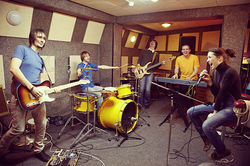 Recording Session |
|---|---|---|
 Drummer | 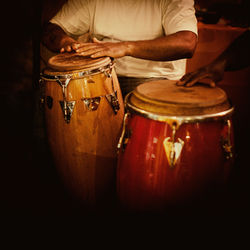 Bongos |  Drummer Red |
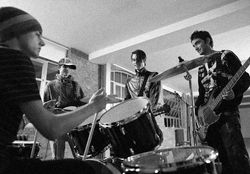 Band Rehearsal |  Drums |  Drum Sticks |
 Drum & Symbol |
The drum set (or drum kit), more commonly referred to as 'drums', is a collection of drums and percussive instruments such as cymbals. The main elements of the drum kit include the toms, snare, cymbals and bass drum (or 'kick' drum). The set is designed for one drummer, who plays with both their hands and feet using drum sticks to hit cymbals and drums.
The drum set is un-pitched; this means that when it is played, a note for example E doesn't come out. The purpose of the drums is to be a rhythmic accompaniment and pulse reinforcement for the rest of the band. This is different to a vocalist, singer, or guitarist who all play pitched instruments that use the notes we have learnt.
The drum kit uses percussion notation, where notes are written differently on the stave and feel the drummer the rhythm and which section of the kit to play. The note heads are different to the traditional ones we have seen previously.

As you can see, the clef is not one we have come across. This is the clef symbol for percussion, and it looks like 2 vertical lines. Note heads that contain an 'x' represent cymbals, and coloured note heads represent drums, such as the snare and toms.
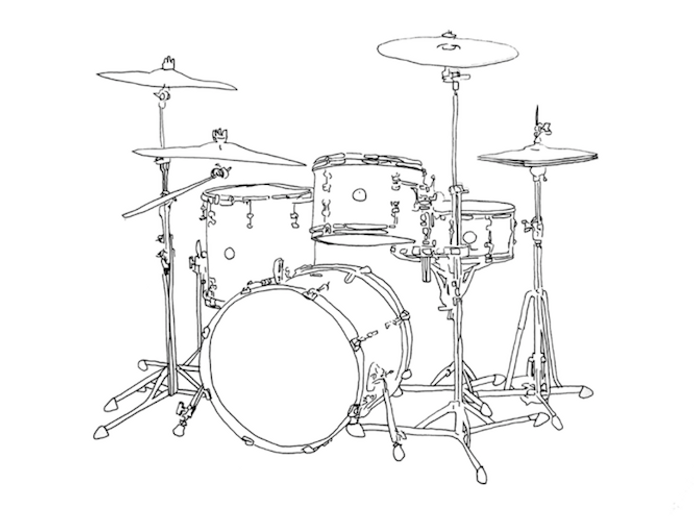
Kick/
bass drum
Snare
Hi-hat
Crash
Tom
Floor Tom
Ride cymbal
Extra Crash
Drummers have their own personal preference of how they set up their kit and which specific drums and cymbals they'd like to use, as well as the placement of them. The positioning changes, however the above diagram is a standard drum kit set up.
bottom of page